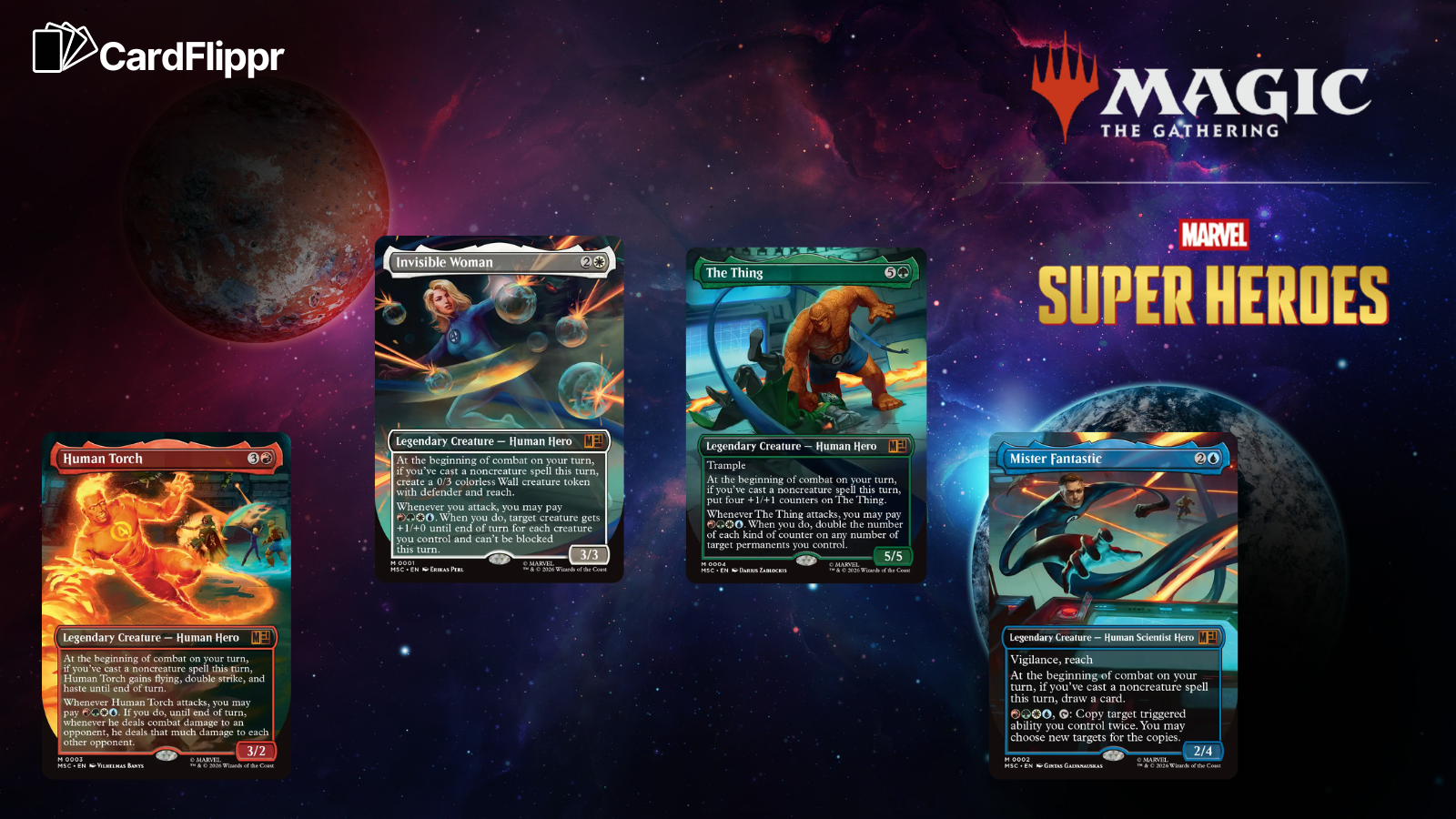
Marvel Super Heroes have a natural “starter” appeal: recognizable characters, clear roles, and an easy story to tell. The trick for new MTG players is translating that character identity excitement into fundamentals that actually win games. In this guide, we’ll bridge Marvel Super Heroes theme deck vibes into core Magic skills—mana curve, removal, and a consistent plan—without needing deep rules knowledge.
Start With a “Character Identity” but Build Like a Deck
When people say they want to play Marvel Super Heroes in MTG, they often mean they want a deck that feels like a hero: a reliable set of actions, a clear win condition, and a thematic curve. That’s a great starting point—as long as you treat it like an identity overlay on top of standard deckbuilding.
Here’s a practical way to do it:
- Pick your hero job: Are you trying to attack quickly, control the board, or generate value over time?
- Choose your “set of abilities”: In Magic terms, that means deciding your mix of ramp (if needed), card draw, board presence, and removal.
- Lock in a consistent mana curve: Even the most “thematic” deck collapses if its early turns are blank.
- Define your win condition: What are you doing when the opponent is trying to stop you?
Expert commentary: In competitive Magic, “theme” is not the deck’s engine. The deck’s engine is the combination of mana curve + threats + interaction density. Theme determines your preferred package of threats and how you want to sequence, but your fundamentals determine how often you can execute.
Use Mana Curve as Your “Origin Story”
One of the fastest ways to make a theme deck feel powerful is to ensure it has a stable early game. Think of your mana curve as the origin sequence: what you can do on turn 1, turn 2, and turn 3 sets the tone.
Try this simple curve test before you commit:
- Early turns (1–3 mana): Aim for enough plays that you’re not skipping turns. Even one-mana or two-mana plays that impact the board matter.
- Mid turns (4–5 mana): This is where most of your “hero moments” land. Your deck should have multiple options to convert board state into advantage.
- Late turns (6+ mana): These should be finishers or payoff cards that you can reasonably reach—without overloading your deck with expensive spells.
If your theme deck is leaning into a value engine, you’ll want the mid-to-late curve to stabilize the game. A great example of value-focused deckbuilding is the card draw and artifact synergy pattern found in [Reckoner Bankbuster]. Even if you’re building for flavor, cards like this encourage you to survive the early turns and then keep gaining resources as the game progresses.
Practical use case: turn-by-turn planning with [Reckoner Bankbuster]
When [Reckoner Bankbuster] is in your deck, your “character identity” should include supporting it:
- Protect and activate: Your plan becomes, “make sure I can cast spells and keep the engine running.”
- Sequence spells: You don’t just play the Bankbuster—you play the game so it keeps generating value.
- Don’t let it be your only threat: If the opponent can answer it, make sure you have additional ways to win after the engine is removed.
Expert commentary: Many new players over-index on “cool engines.” A consistent game plan means you can still function if your engine is delayed or removed. That’s why early plays and interaction density are so important.
Removal Is Your “Villain Control” Package
Every superhero story needs villains, and every Magic deck needs removal. Removal doesn’t have to mean “the only plan is to kill everything.” It should mean you can stop the most dangerous threats and buy time for your deck’s actual win condition.
Beginner-friendly rule of thumb:
- Have answers at multiple costs: Some threats are cheap and fast; others are high-impact late.
- Don’t waste removal on low value: If the opponent plays a token that doesn’t matter, you often can ignore it and save removal for real threats.
- Use removal to improve your trades: Ideally, you remove so that your next threat connects or your card advantage engines keep working.
Even when you’re trying to build a deck with a specific identity—like “the heroes who outlast”—your interaction must still handle the opponent’s fastest and most swingy cards. The best decks don’t just win “fairly”; they win by making sure the opponent never gets an uncontested turn where they dominate the board.
How to decide your removal density
If you’re starting from a theme deck or using a preconstructed core, you can evaluate your removal in a practical way:
- Count the number of cards that can permanently stop a threat (destroy, exile, bounce with follow-up).
- Count the number of cards that only delay (tap, prevent combat, temporary blocks).
- Ensure you have enough early defense and at least a few hard answers for midrange/late threats.
Expert commentary: “Delay” effects are often fine, but if you only delay and never remove, the opponent will eventually play the one card that breaks through. Beginners tend to undercount how many answers they need to survive the opponent’s best turns.
Bridging From Lorehold to Marvel-Style Themes
Now let’s talk about how to take a recognizable deck “skeleton” and reshape it into a Marvel Super Heroes-inspired identity—without breaking consistency. A strong reference point for learning this bridge is [Lorehold Spirit (Secrets of Strixhaven Commander Precon Decklist)]. Even if you’re not playing Commander, this archetype highlights how a preconstructed deck can teach you role clarity: how to build a game plan, not just a pile of cards.
What makes the [Lorehold Spirit (Secrets of Strixhaven Commander Precon Decklist)] approach useful for beginners?
- It models a plan: You can identify what it wants to do and when.
- It teaches sequencing: Precons are built to function turn after turn.
- It emphasizes synergies: Your cards aren’t random—they support shared mechanics and outcomes.
To translate this into a Marvel Super Heroes theme deck approach, think in terms of “roles” rather than names:
- The “mentor” role: Cards that help you set up or accelerate your best turns.
- The “bruiser” role: Mid-cost threats that stabilize board position.
- The “strike” role: Your finishing capability, often through combat pressure or a decisive advantage swing.
Expert commentary: The biggest mistake when people try to theme a deck is confusing “coolness” with “coherence.” The right way is to copy the structure (curve, threats, interaction) and then swap in your flavor-compatible cards.
Practical use case: building your plan around threat types
Suppose you want your Marvel Super Heroes deck to feel like “teamwork”: you start weak, then assemble a board state, then overwhelm. Your deck should include:
- Early plays to avoid dead turns.
- Mid-game value so your heroes don’t fall behind.
- Finishers or decisive pressure that capitalize on the board you worked to create.
Even if you’re using cards like [Reckoner Bankbuster] as a value anchor, you’ll still want the rest of the deck to support it: enough threats to justify attacking, enough interaction to survive until you can press the advantage.
Putting It Together: A Simple Checklist for Theme Deck Picks
When you’re choosing a theme deck—especially one inspired by Marvel Super Heroes—use this checklist to ensure it plays like a real deck:
- Mana curve check: Can you make a play every turn in the first three turns?
- Threat density: Do you have more than one way to win once the opponent stabilizes?
- Interaction budget: Do you have enough removal or disruption to handle the opponent’s strongest turns?
- Value engine support: If you run a card like [Reckoner Bankbuster], can your deck keep it active and still function if it’s removed?
- Role clarity: Are you clear on what your deck does on turns 4–6?
If you’re coming from [Lorehold Spirit (Secrets of Strixhaven Commander Precon Decklist)] style learning, you can also evaluate whether your deck has “teaching patterns”—cards that help you understand how your deck wins. Theme decks should teach you, not confuse you.
Expert commentary: Consistency is not about running the “best” cards; it’s about reducing the number of situations where your deck has no good options. A cohesive theme deck will always have some line it can execute, even when draws are imperfect.
Conclusion: Keep the Flavor, Earn the Win
Marvel Super Heroes can be an amazing doorway into MTG because they make deckbuilding personal. But the path from theme to victory runs through fundamentals: a reliable mana curve, removal that protects your plan, and a coherent set of roles that work together. Whether you’re using an engine approach like [Reckoner Bankbuster] or using precon structure as inspiration like [Lorehold Spirit (Secrets of Strixhaven Commander Precon Decklist)], your goal is the same—build a deck that executes its identity consistently.
Call to action: Pick one Marvel Super Heroes identity you want to play, write down your plan for turns 1–3 and 4–6, and then adjust your deck until the curve and interaction match that story. If you want, share the decklist or list your current theme picks, and we can help you tune the mana curve and removal package for a smoother, more competitive game plan.