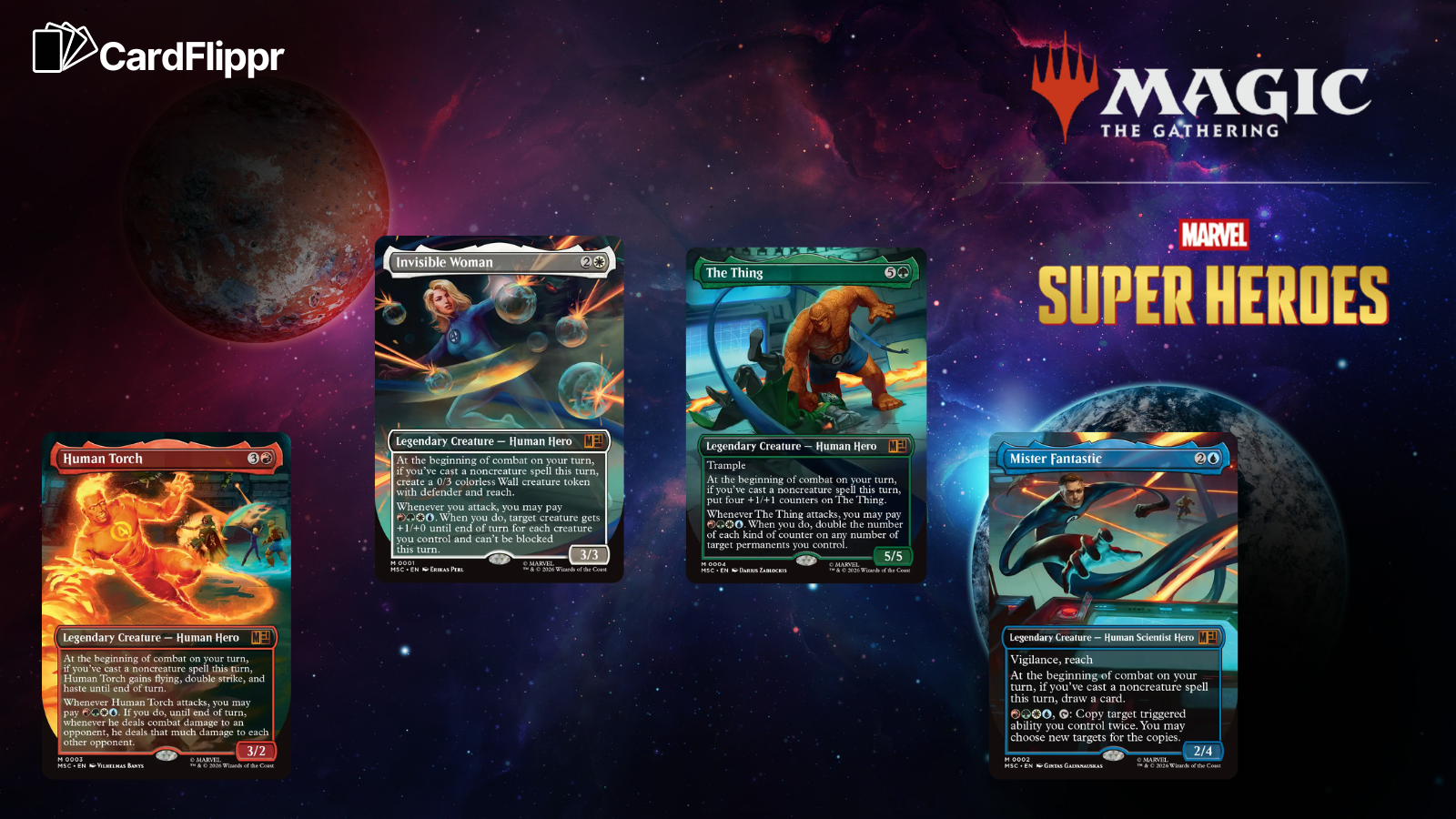

Building a Marvel Super Heroes-themed deck in Magic: The Gathering can feel overwhelming at first—especially when you look at all the card text and keywords. The good news: you don’t need complicated “pro” tech to make your deck consistent. By following a few simple synergy rules, you’ll learn how to plan your draws, protect your game plan, and get more wins from day one.
This guide focuses on a beginner-friendly approach: identify key interactions early, build a reliable mana curve, and include basic ways to stop opponents from taking over. Along the way, we’ll reference three important touchpoints—[Spirited Companion], [Invoke Despair], and the overarching Marvel Super Heroes theme concept—to show how to think instead of just memorize.
Start with “synergy targets,” not a pile of cards
Most early deckbuilding mistakes come from trying to include “good cards” without a clear plan. Instead, begin by choosing synergy targets: cards you want to see every game because they create value together. Then build outward—supporting cards, mana, and interaction—so your deck consistently reaches that game state.
Use a 3-step synergy scan
- Pick one main payoff. For many beginner decks, that payoff is a creature engine, a card-draw loop, or a repeatable removal pattern. With [Spirited Companion], the idea is to treat it as a centerpiece that helps your strategy continue. Even when it’s not doing everything by itself, it typically supports your broader plan by improving your resource flow.
- List 2–4 enablers. Enablers are cards that make the payoff better—often by improving tempo, increasing board presence, or helping you reach the right turn timing. Think in terms of “What lets me do this earlier or more often?”
- Choose 2–3 complementary finishers or follow-ups. Your deck should have a way to end games once the engine is online. That doesn’t mean “all your cards must be finishers,” but you should know what your winning turns look like.
For Marvel Super Heroes builds, synergy often comes from coordinating how your theme pieces interact: themed cards pull you toward specific roles—attacking, blocking, controlling the pace, or leveraging timing windows. Your goal is to make that role cohesive rather than scattered.
Spot key combinations by asking “What turn does this win?”
Synergy isn’t just about matching keywords—it’s about creating a turn-by-turn advantage. Beginners can improve fast by turning card text into a timeline question: On what turn does my deck get meaningfully ahead?
Make simple combo checks
When you consider a potential interaction, ask three questions:
- Does this create value immediately? Cards that affect the board or replace themselves are easier to build around.
- Does it require too many “moving parts”? If you need five cards to work, it’s often too fragile for a first build unless the deck is designed for it.
- Does it scale across turns? Good synergy is resilient: it’s not only great on turn 4, it remains useful on turns 6–8.
Here’s a practical way to apply this concept. Suppose your deck has [Invoke Despair] as a key interaction piece. The synergy question becomes: “How do I create a board state where this removal spell is strongest—when my opponent is trying to stabilize, when they’ve committed threats, or when they’re low on resources?” If your deck can reliably put opponents in positions where their plans line up against [Invoke Despair], that spell stops being “just removal” and becomes a strategic lever.
For Marvel Super Heroes themes, the same principle holds. Your “hero identity” is your role in the matchup: are you the one pressuring early, the one controlling midgame, or the one punishing overextensions? Once you decide, you can spot real synergy and ignore flashy but unreliable lines.
Build a consistent curve: simple rules that beat fancy decks
Consistency is the hidden superpower of beginner deckbuilding. Even the best synergy can fail if your mana curve is chaotic. A deck that curves smoothly will see the right cards at the right times and make better decisions under pressure.
Use the mana curve guideline (and adjust)
- Early turns (1–3 mana): Include enough plays so you can do something relevant on turns 1, 2, and 3. A common goal is to have multiple ways to establish board presence or resource advantage early.
- Midgame (4–6 mana): This is where your core synergy usually “turns on.” Ensure you aren’t overloaded with expensive cards that only work after you fall behind.
- Late game (7+ mana): Fewer cards here, unless your deck is explicitly built to ramp or grind long games.
Now connect curve building to your synergy choices. If [Spirited Companion] is part of your engine, you want to cast it often enough that it meaningfully influences multiple turns. That means the cards around it should help you reach its casting cost at the right time, while your early plays should prevent you from being out-tempoed before the engine starts.
Practical curve balancing exercise
Take your draft list and do a quick count:
- Count how many cards cost 0–3 mana, 4–6 mana, and 7+ mana.
- If you have too many high-cost cards, remove the most “situational” ones first.
- If your early turns are empty, add basic curve-fillers (creatures, low-cost interaction, or cantrip-like value cards) that match your game plan.
This is one of the easiest ways to transform a deck from “sometimes great” to “consistently functional.” For Marvel Super Heroes decks, a stable curve also helps you keep your themed identity: your heroes feel purposeful rather than stuck waiting for the right turn.
Protect your game plan with basic interaction
A beginner deck needs interaction, but it doesn’t need complicated disruption. The goal is to protect the turns where your synergy matters. If your plan relies on keeping a creature alive or forcing a specific timing window, then your interaction must cover the most common threats at those times.
Choose interaction based on the role you’re playing
Consider two beginner-friendly interaction types:
- Spot removal for problem permanents: Remove threats that stop you from attacking, blocking, or executing your plan.
- Board pacing tools: Trade resources efficiently so your deck doesn’t fall behind in the midgame.
[Invoke Despair] fits naturally into this framework if your deck wants to punish the opponent when they commit. Use it to stop a critical stabilizing creature, punish a key attacker, or force unfavorable trades. The synergy here is strategic: your deck doesn’t just “play a removal spell,” it uses removal to shape the game into your preferred state.
How much interaction is enough?
As a rule of thumb for starting builds, include interaction across the mana curve so you aren’t stuck unable to answer threats. Instead of counting exact numbers, think in terms of matchups:
- If your deck struggles vs. board pressure, prioritize early and mid-cost answers.
- If your deck struggles vs. single large threats, ensure you can reliably deal with them on the turns they become dangerous.
- If your deck struggles vs. heavy value decks, consider interaction that also buys tempo so you don’t merely “catch up,” but get back ahead.
This is also where Marvel Super Heroes themes benefit: your themed pieces can determine what kinds of interaction feel “on theme.” But even the best thematic deck must do the math: if you never answer a particular threat type, you lose consistently.
Expert commentary: run synergy like an engineering project
Experienced deckbuilders treat synergy as a system, not a vibe. They identify the “core loop,” then ensure all supporting components reduce failure points.
Spot failure points in your first draft
Ask what goes wrong when your plan doesn’t happen:
- What if you draw too many payoffs? You may need more enablers or cheaper ways to advance.
- What if you miss on mana? You may need fewer expensive cards or more curve support.
- What if your opponent removes your key pieces? Consider whether you have backup threats or follow-ups that keep the plan alive.
Now apply that thinking to the specific entities. With [Spirited Companion], your failure case might be “I don’t see it often enough” or “it gets removed before it matters.” With [Invoke Despair], your failure case might be “I hold it too long and lose value” or “I spend it when the opponent still has better options.” The fix is rarely “add more random cards.” It’s usually “adjust your timing, curve, and density of complementary pieces.”
Finally, remember that Marvel Super Heroes deckbuilding works best when the theme expresses a role. If your deck is trying to be both a slow controller and a fast attacker without support, the synergy will feel inconsistent. Pick your identity, then align the rest of your list to that identity.
Conclusion: draft smarter synergy, then tune
Marvel Super Heroes-themed decks can be remarkably approachable when you build around synergy first. Choose a clear payoff like [Spirited Companion], protect the timing that makes it matter, and use tools such as [Invoke Despair] to keep opponents from stabilizing on their schedule. Most importantly, build a smooth mana curve so your plan is available in every game, not just the lucky ones.
Call-to-action: Take your current list (even if it’s a rough draft), count your mana curve by buckets, identify your main payoff and enablers, and add or cut cards to reduce failure points. Then test a few matches and record where you stumble—on turn one, turn four, or the moment your opponent answers your key play. With that feedback loop, your Marvel Super Heroes deck will evolve from “fun” into genuinely consistent.