
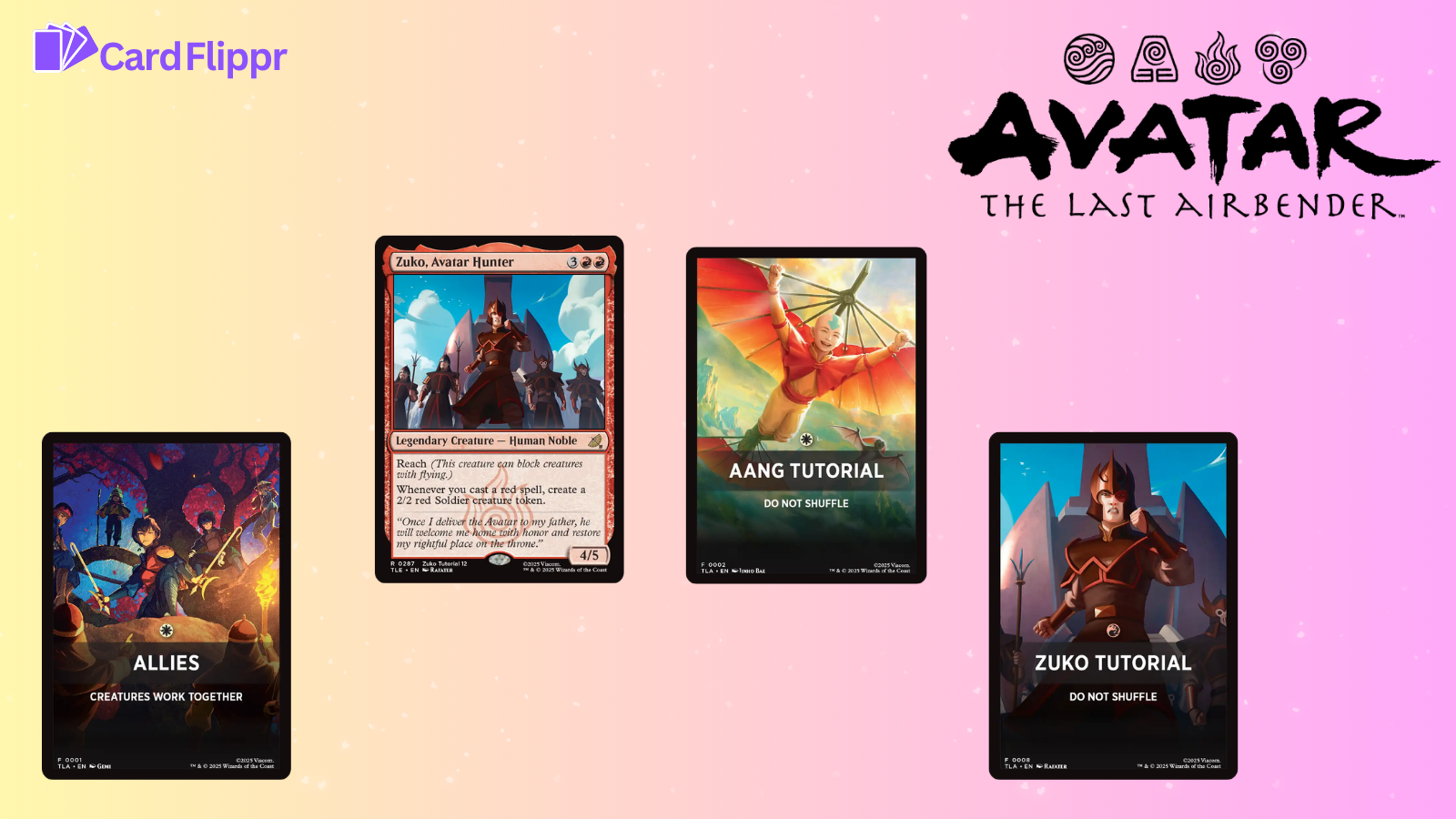
The Avatar: Beginner Box is more than a way to start playing—it’s a structured opportunity to build real decision-making skills. In this guide, you’ll learn how to turn your starter games into a deliberate practice routine so your moves improve every turn.
Whether you’re brand new to Magic or rebuilding fundamentals, this strategy uses simple steps and concrete in-game targets. We’ll also show how to think with the cards you’ll actually see, including [Spirited Companion] and the land [Abandoned Mire], and how board states connect to win conditions like those in [Takenuma].
Step 1: Treat the box like a training program, not a one-off
Most beginners open a starter product, play a few matches, and move on. Instead, approach the Avatar: Beginner Box like a course: each game is a graded drill. Your goal isn’t just to win—it’s to repeat the behaviors that lead to wins.
Use a simple “focus rule” each session:
- Game 1 (Mana discipline): Practice taking the best land drops and planning turns ahead.
- Game 2 (Sequencing): Decide when to deploy threats vs. keep mana available.
- Game 3 (Combat clarity): Track blockers, combat math, and trade-offs.
- Game 4 (Win condition): Identify your path to victory and play to it.
This is how you convert casual play into learning. When you repeat the same environment, your brain stops being surprised and starts noticing patterns—exactly what improves gameplay.
Step 2: Master sequencing with “mana + purpose” decisions
Sequencing is the beginner skill that most directly turns into better results. Every turn, ask two questions in order:
- What is my mana plan this turn? (Do I need mana for a defensive play, a main-phase play, or a future turn?)
- What is my purpose this turn? (Build advantage, advance the board, protect my life total, or set up a payoff.)
When you play around your mana instead of reacting randomly, you’ll stop missing obvious lines like “play the creature now” or “hold up protection because combat will matter.”
Here’s a concrete way to practice sequencing using [Spirited Companion]. Think of it as a card that rewards you for making the right tempo and resource decisions. Beginners often ask “Can I cast it?” when they should ask:
- Does casting [Spirited Companion] now improve my board or curve?
- Am I walking into a trade where my creature will be removed without gaining enough value?
- If I delay, do I keep mana for interaction or a follow-up?
Expert commentary: Even without complex card text, your sequencing should reflect tempo. If your opponent can immediately negate your play with minimal cost, that’s a sign your timing is off—not necessarily that the card is bad. Your job is to cast it in a way that forces a tough choice.
Step 3: Identify win conditions—then play toward them every game
A win condition is the “endgame story” of your deck: the consistent reason you win even when draws are messy. Beginners often play what’s in front of them each turn, but the deck doesn’t win by being busy—it wins by being pointed.
In a box-based learning context like the Avatar: Beginner Box, you should be able to state your win condition in one sentence after your opening hand. Examples of how to think:
- Board win: You win by building a board state your opponent can’t efficiently answer.
- Tempo win: You win by staying ahead in mana and forcing unfavorable trades.
- Value win: You win by accumulating advantages over time until you can convert into damage or control.
Now connect that to how you play lands and combats. Lands are not filler—they are part of the plan. When you see [Takenuma], approach it as a signal of how the deck stabilizes or changes the game’s pace. Beginners often play lands “because they can,” but win-condition planning asks you to consider when a land’s role matters most.
[Takenuma] should influence your turn timing. If it represents future value or a swing in your favor, then earlier turns may need to be cautious. You might hold back certain attacks or refrain from spending removal too early, because you’re trying to reach a position where your later turns dominate.
Expert commentary: A reliable practice is to pause after turn two and write down your intended plan. If you can’t explain how you win from that hand, your first turns weren’t guided. With repetition, you’ll naturally start seeing lines sooner.
Step 4: Use the land lesson—Abandoned Mire and resource stability
Winning consistently starts with basic resource management. The land [Abandoned Mire] is a perfect example of why you should evaluate mana as a game resource, not just a condition to meet before casting spells.
When [Abandoned Mire] is in your game, treat it like a reminder to track:
- Your future turns: What do you need mana for on turns three, four, and five?
- Your ability to recover: If your mana is disrupted, can you still play relevant spells?
- Your curve accuracy: Are you overloading on expensive cards, forcing awkward turns?
Beginner mistake: casting everything “as soon as possible.” That often leads to empty turns where you can’t respond. Resource stability means you plan land usage so you keep options—especially when combat starts.
Expert commentary: If your opening hand includes lands like [Abandoned Mire], your mulligan decisions and early sequencing should reflect the deck’s tempo. You’re not only checking whether you have mana—you’re checking whether that mana creates choices. The best beginners learn to prioritize “smooth turns” over “perfect turns,” because smooth turns let you keep decision flexibility.
Step 5: Turn practice into measurable improvements (turn-by-turn)
Now that you know how to sequence and identify win conditions, the final step is measuring improvement. Beginners improve fastest when they can pinpoint exactly where decisions went wrong.
After each match with your Avatar: Beginner Box, do a quick post-game review using this checklist:
- Turn 1–2: Did I miss a land drop or develop too early without a plan?
- Turn 3–4: Did I hold mana for important plays, or did I waste tempo?
- Combat: Did I attack into unfavorable blocks, or did I set up trades that advanced my win condition?
- Key cards: Did [Spirited Companion] appear at the right time, or was I forcing it?
- Land role: Did [Abandoned Mire] help stabilize my game plan, or did I create awkward turns?
- Endgame: Did [Takenuma] (or the plan it represents) shape how I played earlier turns?
To make this even more actionable, try a “pause rule” during games:
Once per game, pause before you commit to an attack or main-phase play. Ask: “What happens if my opponent responds in the best way?” Then choose the line that still makes sense after the response.
Expert commentary: This pause prevents “emotion plays.” Beginners often get pulled into momentum—playing the next action because it feels productive—rather than because it’s optimal under resistance. By checking the opponent’s best reply, you build a more resilient decision process.
Common beginner traps (and how to fix them with this box strategy)
- Trap: Casting on curve without purpose. Fix: Every turn should have a goal: build, pressure, protect, or set up.
- Trap: Overvaluing a single card. Fix: Cards like [Spirited Companion] are tools. Your win condition decides whether the tool is deployed now or later.
- Trap: Ignoring land timing. Fix: Lands such as [Abandoned Mire] and the role represented by [Takenuma] should influence your turn sequencing decisions.
- Trap: Attacking without understanding combat math. Fix: Always count blockers, trades, and what you expect next turn. If you can’t explain why an attack is good, it’s probably too risky.
Conclusion: Make your Avatar Beginner Box your daily practice loop
The fastest way to learn Magic is to play with intention. The Avatar: Beginner Box gives you a consistent environment to practice sequencing, win-condition planning, and resource stability—skills that carry into every other format you try later.
Start tonight with the training plan: one focus rule per game, a one-sentence win condition after your opening hand, and a turn-by-turn pause before key commits. Then track what improved—especially how you deploy [Spirited Companion], how [Takenuma] shapes your timing, and how [Abandoned Mire] supports your mana decisions.
Call to action: Queue up a few learning games, apply the checklist after each match, and repeat the drill over a week. If you want, tell me your typical opening hand and what win condition you think you’re pursuing—I can help you refine your next-turn choices.