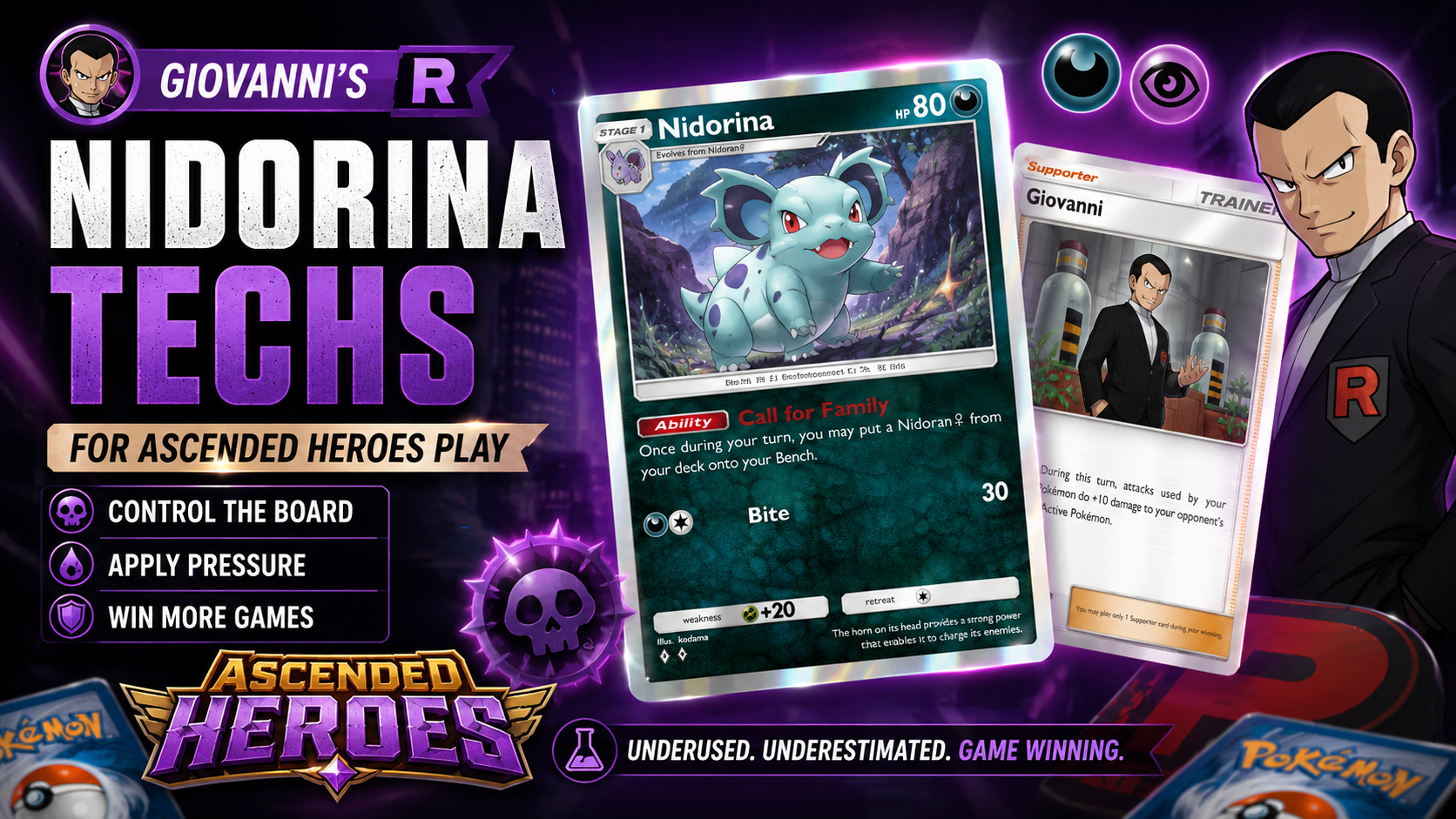
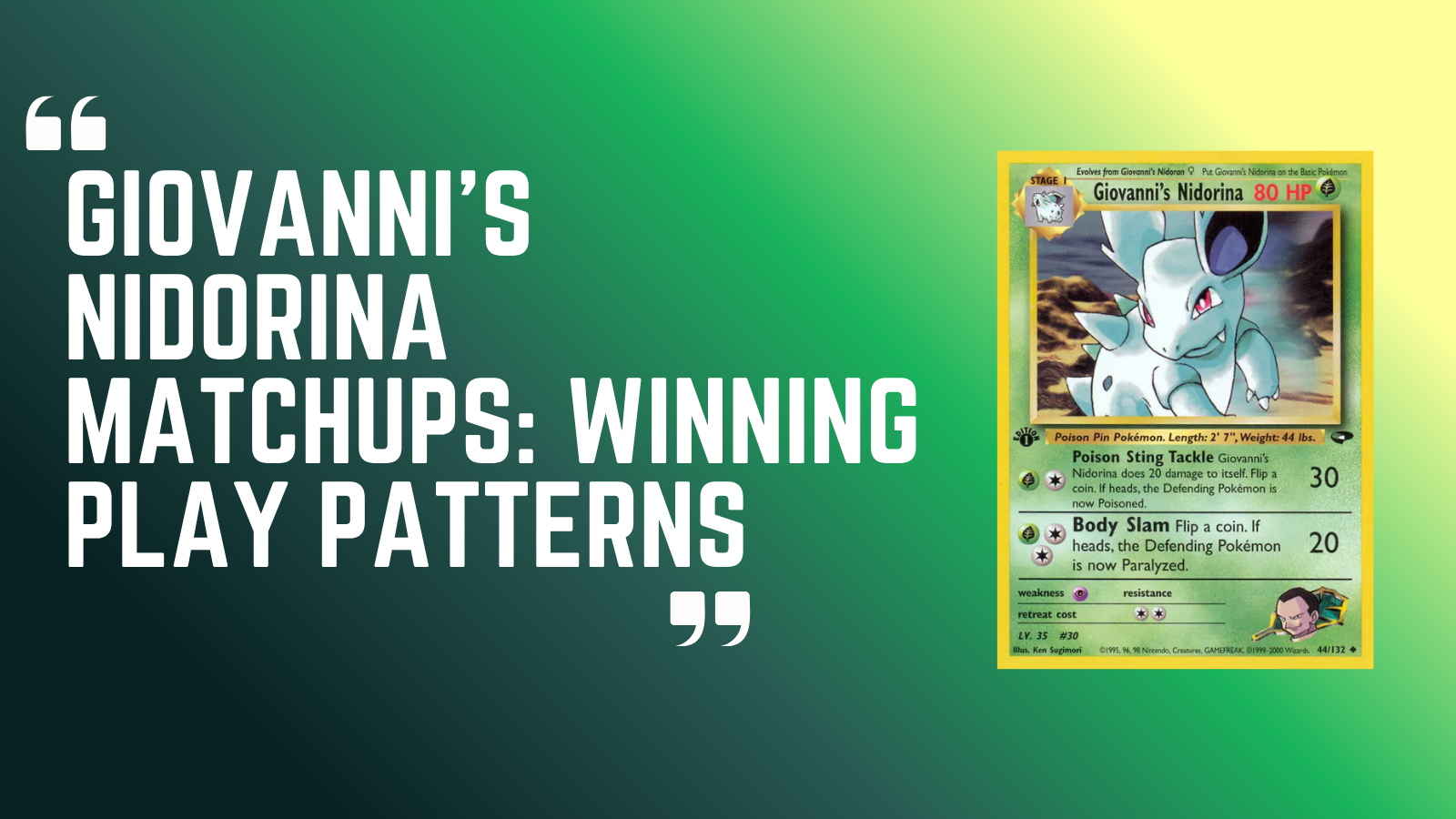
Giovanni’s Nidorina changes games in a very specific way: it rewards opponents who overextend while punishing lines that ignore tempo. This guide focuses on meta-friendly matchup patterns—what you should expect, what your opponent is trying to do, and how to choose the right commits around Giovanni’s Nidorina without relying on advanced math.
Whether you’re piloting a streamlined list or taking your best shot in a tournament field, the goal is simple: make fewer “guess” decisions and more repeatable play patterns.
1) The Core Gameplan: Reading the Board Around Giovanni’s Nidorina
The most important skill in any matchup involving Giovanni’s Nidorina is identifying when the card is a threat you must respect versus a threat you can safely ignore for a turn.
In practice, Giovanni’s Nidorina tends to become dangerous when your opponent has a clear follow-up—meaning they can keep pressure while protecting their engine. That’s why your early turns matter: you’re not just trying to “race,” you’re trying to remove the conditions that make their best line available.
Actionable opening principles
- Prioritize developing your board over spending everything on removal. If you empty your hand too early, [Giovanni’s Nidorina] will often convert surviving turns into decisive tempo.
- Track resource type, not just cards. When Darkness Energy is showing up in their plan, assume they can create combat math swings or steady pressure—so your decisions should account for repeated threat cycles.
- Don’t “answer everything.” Instead, answer the turn that would otherwise let Giovanni’s Nidorina stabilize and start snowballing.
Expert commentary: In meta games, the winning lists are usually the ones that recognize that tempo threats are not equal. Some turns are “pay now or lose later” turns. Your job is to identify those turns by watching how your opponent spaces their commitment around [Giovanni’s Nidorina].
2) Matchup Pattern: When to Commit Resources (and When to Hold Back)
Most losing lines against [Giovanni’s Nidorina] come from one of two mistakes: committing too early into a favorable trade for your opponent, or holding too long and letting their engine start compounding. The fix is to use a simple pivot framework based on board state and threat timing.
Commit when these conditions are true
- You can create a tempo gap immediately. If you spend removal or removal-equivalents and still develop afterward, it’s usually correct to pull the trigger.
- Your opponent is tapped out of follow-up. If their likely next turn is weaker than yours, trade now to win the next two turns instead of the immediate turn.
- You can force bad sequencing. If you make it so they have to respond instead of progress their [Giovanni’s Nidorina] plan, you’ve earned the right to spend.
Hold back when these conditions are true
- Your removal is “one-for-one” but you won’t replace it. Spending key resources and then falling behind is often worse than letting a smaller threat sit for a turn.
- Their board suggests multiple combat threats. When Darkness Energy enables repeated pressure, your first answer may not be enough. In those cases, hold removal until you can answer the most punishing angle.
- You don’t know which line they’re on yet. Early uncertainty is normal—use scalable plays that leave you options, rather than committing everything into an unclear threat.
Expert commentary: Think of Giovanni’s Nidorina as a “line chooser” card. Your opponent wants you to commit into their preferred timing. When you commit at the wrong moment, they get to keep initiative. When you commit at the right moment, you break initiative and take control of the game’s rhythm.
3) Midgame Patterns: Converting Pressure Without Getting Punished
The midgame is where meta matchups become real. Against Giovanni’s Nidorina, you’re usually deciding between two strategies: (1) push damage while you’re ahead, or (2) stabilize until you can answer the next threat cycle cleanly.
A useful mindset is to treat each turn as having an “initiative cost.” If your line spends resources that reduce your ability to block or respond, you increase the initiative you are giving the opponent. Since Darkness Energy often supports sustained pressure, you want your initiative spend to be intentional.
Three midgame play patterns that win
- Trade-and-advance: Make a trade that removes their best attacker or best tempo piece, then immediately develop a board presence that makes your opponent’s next turn awkward.
- Threat stacking: Don’t just add threats—add threats that change what their combat decisions look like. When they can’t attack profitably with Giovanni’s Nidorina, their Darkness Energy plan often loses momentum.
- Answer windows: If you suspect they’re setting up a specific line, don’t answer blindly. Wait until the turn they would gain the most—then respond with enough force to stop the follow-through.
Expert commentary: A common trap is “winning the turn you answer.” Winning the matchup requires winning the turns